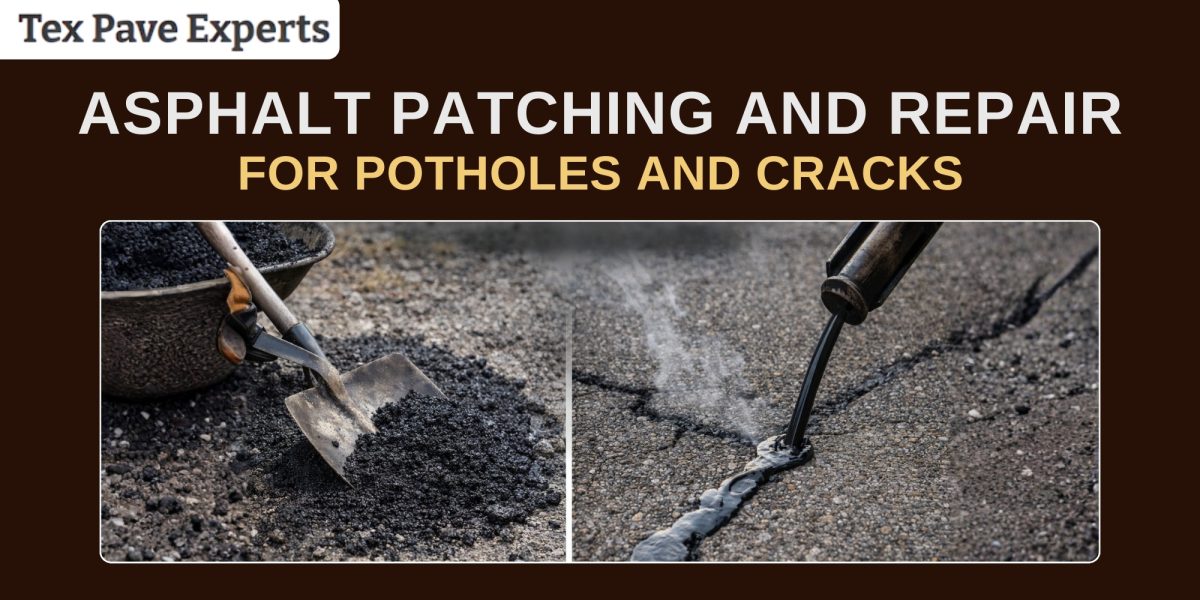
Keeping asphalt surfaces smooth and hazard‑free means tackling potholes and cracks as soon as they appear. Left untreated, water seeps into damaged areas, the freeze-thaw cycle enlarges the voids and traffic loads pound the pavement into bigger potholes or spider‑web cracks. Timely patching restores structural integrity and extends pavement life, but not all repairs are created equal. What factors determine whether a patch will last for months or for years? Below we discuss the science of asphalt patching and repair, compare repair methods and offer practical advice, drawing on industry research and Tex Pave Experts’ decades of field experience.
Why Does Asphalt Deteriorates?
Pavement begins to fail when the base or surface cannot resist moisture and stress. Water infiltrates through small cracks, freezes and expands, creating voids beneath the surface. Traffic compresses the weakened area until it collapses into a pothole. Without intervention the damage grows quickly, increasing repair costs and safety risks. Properly designed asphalt, with a strong base, correct compaction and good drainage, can last 15 – 30 years. When these elements are missing, patching and repair become inevitable.
Choosing the Right Patch: Cold Mix vs. Hot Mix?
A patch’s longevity depends largely on the material and installation technique.
Cold mix - a short‑term fix
During winter or emergency situations, asphalt plants close and hot mix cannot be compacted at freezing temperatures. Contractors use cold mix asphalt, which comes premixed in bags and can be shoveled directly into a hole. Cold mix seals the pothole and prevents further water damage, but it is a temporary, stop‑gap solution. Because the material is not heated, it does not cure and lacks the structural strength of hot mix; industry guidelines suggest cold patches should not remain in place for more than a month.
Hot mix - durable and permanent
For permanent repairs, hot mix asphalt is the gold standard. The asphalt is heated to a high temperature and inserted into the crack or pothole; heavy equipment compacts and levels it so it bonds with surrounding pavement. Hot mix provides a dense, durable surface that withstands traffic and weather when applied in warm conditions. Seasonal timing matters: spring and summer offer ideal temperatures for compaction and curing, whereas hot mix applied in cold weather may cool too quickly and fail to bond. A properly installed hot mix patch can last up to ten years.
Infrared and full‑depth patching
Other methods include infrared asphalt repair, which uses infrared heat to blend existing pavement with new material and leaves no visible seams, and full‑depth patching, where the damaged area is removed down to the base and replaced. Full‑depth patches are the longest‑lasting option for areas with structural problems.
Preparation: the Foundation of a Long‑Lasting Patch
Regardless of the material, preparation is critical. A quality patch does more than fill a hole; it restores the structural base so the repair can withstand loads and temperature changes. Key steps include:
- Clean and remove debris – Loose material, dust and water must be removed from the pothole or crack. Landmark Paving notes that effective patching begins with clearing debris and leveling the repair area. For longer‑lasting patches, contractors trim back the damaged area to create vertical edges and remove weak asphalt.
- Repair the foundation – Fill the void with a coarse gravel mixture and compact it until it is level; this provides a solid sub‑base for the patch. Without a stable base, new asphalt will simply sink or crack again.
- Apply tack coat (if using hot mix) – A tack coat promotes adhesion between the old pavement and the new patch. Full‑depth patching methods include applying a tack coat before placing the asphalt mix.
- Proper compaction – Compaction is essential for hot mix patches. Rolling or tamping squeezes out air voids and interlocks aggregates. Insufficient compaction leaves air pockets that allow water infiltration and premature failure.
- Seal the surface – After the asphalt cools, sealcoating protects the patch from oxidation, UV damage and moisture. Sealcoating should only be applied once the asphalt has cured and the oils have baked out; otherwise the sealer will not adhere properly.
Seasonal Timing and Climate
The season you choose for repairs significantly affects patch performance. According to GMC Contractors’ seasonal guide, cold mix patches are suitable for winter emergencies but should be replaced with permanent repairs in spring. Spring offers a balance of warm temperatures and stable ground conditions, making it the best season for hot mix patching. Summer provides maximum efficiency and compaction, producing dense and long‑lasting patches. Fall is ideal for preventive crack sealing and sealcoating before winter. Scheduling repairs at the right time reduces the risk of patch failure due to improper curing or sub‑base movement.
How Long Does a Patch Last?
Longevity depends on the repair method and site conditions:
- Reconstruction vs. Patching – Full reconstruction, which removes and replaces all asphalt layers, can last up to 25 years. Patching extends the life of existing pavement by 2 – 10 years depending on the type of patch, traffic load and maintenance.
- Surface patching is a quick fix for shallow potholes and may only last a few months.
- Partial‑depth patching removes 1-2 inches of material; it provides a longer‑term solution for shallow potholes or cracks.
- Full‑depth patching removes and replaces material down to the base and is the longest‑lasting patch option.
- Cold mix patches are temporary; they should be replaced within a season.
- Hot mix patches installed in optimal temperatures can last up to ten years when the base and compaction are sound.
Proper maintenance, such as crack sealing and sealcoating every few years, can further extend patch life and protect the surrounding pavement.
When to Asphalt Patch and Repair?
Patching is ideal when damage is isolated and the base remains solid. If more than 25 % of the surface exhibits deep cracks or structural failure, repaving is the better long‑term solution. Tex Pave Experts can assess whether a pothole or crack problem requires a surface repair, an overlay or a complete reconstruction.
Why Professional Installation Matters?
The quality of a patch hinges on the installer’s knowledge and equipment. Poor workmanship – such as inadequate base preparation or compaction – leads to early cracking and failure. Experienced contractors understand soil conditions, choose the correct mix, and adjust compaction to match local climate. For example, North Texas’ expansive clay soils require special attention to drainage and foundation work. Tex Pave Experts brings 35+ years of paving experience and local expertise to every job, ensuring your patches and paving projects are built to last.
Best Practices for Long‑Lasting Asphalt Patches
- Use the right material – Choose hot mix for permanent repairs and cold mix only as a temporary measure.
- Prepare the area – Clean debris, repair the base and create vertical edges for better bonding.
- Compact properly – Achieve adequate density by rolling or tamping during the hot mix’s workable temperature window.
- Schedule wisely – Plan permanent patches in spring or summer to ensure proper curing.
- Maintain after patching – Sealcoat and crack seal to protect the repair and surrounding pavement.
- Seek professional expertise – Trust experienced contractors like Tex Pave Experts for evaluation and installation.
How Tex Pave Experts Can Help?
As a family‑run paving contractor serving North Texas for over three decades, Tex Pave Experts offers comprehensive asphalt repair and paving services. Our asphalt paving solutions page details how we build durable driveways, roads and parking lots tailored to local soils and weather. Our Asphalt Paving Techniques article explains modern hot‑mix, warm‑mix and recycled pavement options. For property owners curious about asphalt’s composition, our post on what asphalt is made of provides a deep dive into aggregates, bitumen and mineral fillers. We also offer essential maintenance tips to help homeowners protect their investment and guidance on how long a driveway can last.
If you’re weighing materials, our comparison of asphalt and concrete costs explores up‑front expenses and life‑cycle considerations. When surface damage becomes widespread, our guide to asphalt overlays outlines cost ranges and when resurfacing makes sense. And if you’re concerned about workmanship, learn to spot the signs of a bad asphalt job so you can protect yourself.
Beyond asphalt, we also offer concrete services for driveways, patios and slabs; our concrete page explains why concrete can last 30-40 years and how we tailor mixes to North Texas soils. Whether you need a small pothole patched, cracks sealed, or a new pavement installed, Tex Pave Experts provides free estimates, honest advice and quality workmanship. Contact us today to discuss your project and discover how professional patching can extend your pavement’s life.