Concrete pavement works on a simple idea: a slab of engineered rock carries massive wheel loads by spreading them across a prepared base. If that slab isn’t thick enough, traffic loads cause the concrete to flex more than it can handle. Because concrete is strong in compression but relatively weak in tension, a thin slab under heavy vehicles develops tension cracks. Making the slab thicker gives it greater bending strength, spreads wheel loads over a larger area, and reduces tensile stress. A uniform, compacted base is equally important because it reduces differential movement and helps distribute loads.
This article explains how to choose the right slab thickness for different traffic loads. It combines engineering guidelines with insights from Tex Pave Experts, a full‑service paving contractor with decades of experience in concrete and asphalt. We’ll look at how traffic type, subgrade conditions, and climate influence pavement design, and offer practical recommendations for homes, businesses, and heavy‑duty applications. Throughout the article, you’ll find links to relevant service pages and blog posts on our site for deeper reading.
Why Concrete Paving Thickness Matters?
When you park a car on a concrete slab, the weight of the vehicle compresses the slab and causes bending at the bottom. For a thin slab, this bending creates high tensile stress at the bottom face of the concrete. Because concrete is not as strong in tension, the slab may crack and eventually fail. Increasing the thickness greatly improves the slab’s ability to carry tensile stress. In practical terms, a 1-inch increase in thickness can increase load‑bearing capacity by 50-100 %, so thickness is a very cost‑effective way to extend pavement life.
Thickness also affects joint spacing. The Pennsylvania Aggregates and Concrete Association notes that control joints should be 15 feet apart on an 8‑inch slab but only 10-12 feet apart on a 5‑inch slab. Thicker slabs permit wider joint spacing and reduce the number of joints to maintain. However, thicker concrete costs more and takes longer to cure. The goal is to select a thickness that balances strength and cost for the expected loads.
What are the Factors that determine the right thickness?
Several factors influence concrete thickness:
- Traffic type and intensity. Light‑duty surfaces such as patios and sidewalks see mostly pedestrian traffic and small carts, while driveways must support cars and pickup trucks. Commercial parking lots may have delivery trucks and occasional heavy equipment. Industrial pavements handle tractor‑trailers, forklifts, and sustained heavy loads. The heavier and more frequent the loads, the thicker the concrete should be.
- Subgrade soil quality. A stable, well‑drained soil allows thinner slabs because the soil distributes loads evenly. Clay or poorly compacted soils deflect more and require thicker concrete to prevent bending and cracking. The City of Bondurant’s 2025 street design policy requires a 12‑inch moisture‑ and density‑controlled subgrade below residential streets, emphasising the role of subgrade in long‑term performance.
- Base and reinforcement. A gravel or crushed stone base spreads wheel loads and prevents pumping of the subgrade. Even with a thick slab, an inadequate base can lead to cracking. Adding steel reinforcement or fiber mesh helps control cracking and allows slightly thinner slabs for the same load; however, reinforcement does not replace proper thickness.
- Climate and environment. Freeze-thaw cycles cause water in the slab to expand and contract, which can lead to scaling and cracks. In cold climates, designers often specify an extra inch or two of thickness to increase stiffness and reduce thermal stresses. Areas with expansive clay soils or high groundwater may also need thicker slabs or subsurface drainage.
- Local codes and design life. Municipal codes often prescribe minimum pavement thicknesses for public streets and commercial facilities. Bondurant’s policy, for example, specifies a 7‑inch jointed plain concrete pavement (JPCP) for residential streets and requires 8 inches or more for non‑residential streets carrying trucks.
What is the Recommended thicknesses for different traffic loads?
Sidewalks, patios and light‑duty slabs
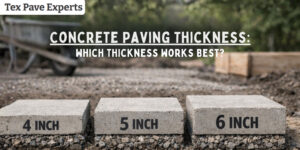
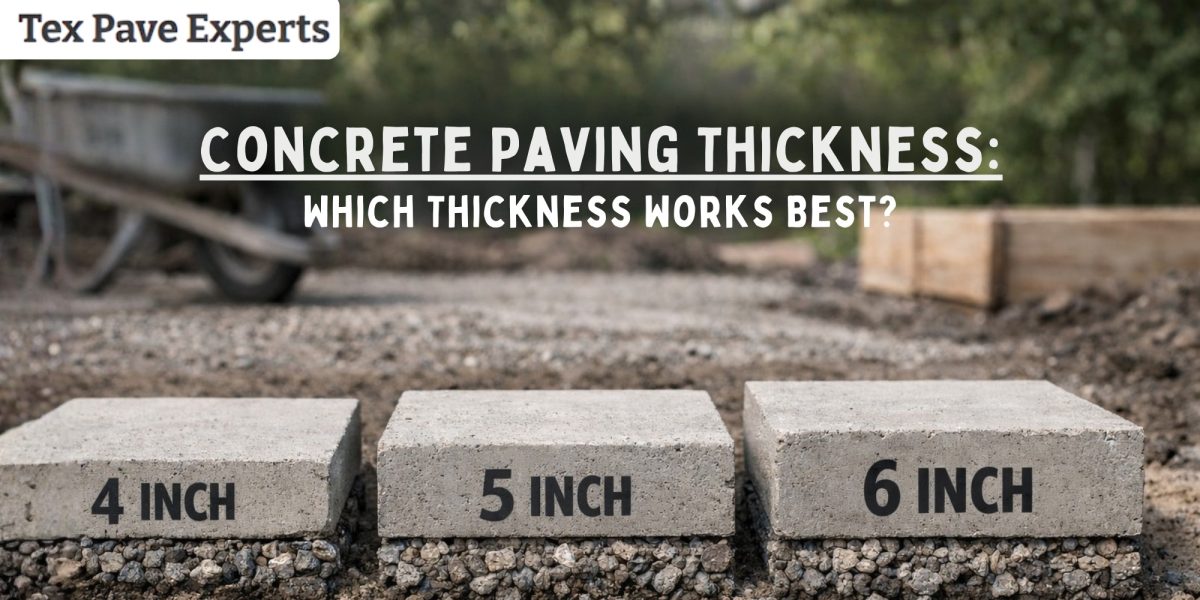
For pedestrian traffic, outdoor seating areas and patios, a 4 inch thick slab is typically adequate. Alpha Paving and other industry sources note that most sidewalks and patios require 4 inches of concrete. A well‑compacted base and proper jointing are essential, but thicker concrete generally isn’t necessary for these light loads.
Residential driveways
A standard residential driveway that accommodates passenger cars and light SUVs performs well with a 4-inch slab placed over a compacted base. However, if you own heavier vehicles (large pickup trucks, vans, or small recreational vehicles), increasing the thickness to 5 inches provides extra bending strength and reduces the risk of cracking. Contractors often thicken the edges of the driveway to 5-6 inches to support wheel loads near the slab perimeter.
Our asphalt paving page explains why proper thickness and base preparation are equally important in asphalt work; the same principles apply to concrete driveways. If you’re considering asphalt instead of concrete, our blog on whether asphalt is cheaper than concrete compares the materials over their lifespan.
Heavy‑duty residential and mixed‑use driveways
Driveways that regularly support work trucks, trailers or occasional RVs should be 5-6 inches thick. Milliken Corp. notes that a residential driveway carrying heavier vehicles should increase thickness to 5-6 inches to handle the added load. Onyx LCB similarly recommends 5-6 inch slabs for heavy‑duty residential driveways and emphasises the importance of a 6-8‑inch compacted base. In areas with clay soils or freeze-thaw conditions, 6 inches may be necessary. When your driveway also receives delivery trucks or sees frequent turning movements, consider thickening high‑stress areas or installing a thicker apron at the entrance.
Looking for alternatives? An asphalt overlay can rejuvenate an existing concrete driveway when the base is sound; our blog on asphalt overlays explains how a 1.5‑ to 2‑inch overlay can extend pavement life.
Commercial parking lots and driveways
Commercial driveways and parking lots handle heavier vehicles, frequent traffic, and occasional point loads from dumpsters or delivery trucks. Industry guidelines generally recommend 6 inches of concrete for standard commercial parking lots. For heavy‑duty lots, the Pennsylvania Aggregates and Concrete Association notes that newer standards specify 6.5 inch concrete over a compacted earth base. Colorado Concrete Solutions states that commercial slabs average 6 inches thick, with edges and aprons often thickened to 8-10 inches. Areas around loading docks, dumpster pads, and drive lanes may need 8-12 inches of concrete.
If you’re planning a commercial parking lot, our asphalt paving service page discusses factors such as thickness, subgrade, and drainage that influence cost and performance. You can also compare the environmental benefits of asphalt in our blog on eco‑friendly asphalt, where we explain how reclaimed asphalt is recycled at high rates.
Industrial pavements, bus lanes and streets
For pavements carrying heavy trucks, buses or sustained high volumes of traffic, designers specify 8-12 inch slabs. The City of Bondurant’s design policy requires thicknesses of 8 inches or more for non‑residential streets designed to carry trucks. The Michigan Concrete Association advises 7-8 inch slabs for loading docks and dumpster pads, and notes that thickness may reach 12 inches depending on truck weight and frequency. Major highways often use 11-12 inch jointed concrete pavements. In commercial settings with heavy forklifts, Colorado Concrete Solutions mentions that extra‑tough areas of commercial slabs are poured up to 12 inches thick.
Streets and sidewalks in residential subdivisions
Municipal standards require thicker concrete for streets than for driveways. Bondurant’s 2025 policy specifies a 7‑inch jointed plain concrete pavement for residential local streets and mandates transverse joints every 15 feet. The policy also notes that non‑residential streets carrying truck traffic must have thickness determined by design, often 8 inches or more, with special jointing to handle heavy loads. If your neighbourhood street is showing premature deterioration, our blog on signs of a bad asphalt job explains how inadequate thickness and poor base preparation lead to early failure.
Base preparation and reinforcement - don’t overlook the foundation
Choosing the right concrete thickness is only part of the design. A thick slab poured over an unstable subgrade may still crack. Most residential and commercial slabs sit on 4-8 inches of compacted gravel. For heavy‑duty work, municipal standards often require a 12‑inch moisture‑controlled subgrade. The Pennsylvania Aggregates and Concrete Association points out that newer parking lot designs sometimes eliminate the subbase and pour 5-6 inch concrete directly on well‑compacted earth, but this requires careful soil evaluation.
Reinforcement helps control cracking and increases load capacity. Steel rebar or wire mesh holds cracks tightly together and allows the slab to act as a single unit under load. For example, Colorado Concrete Solutions notes that commercial concrete is often more heavily reinforced than residential slabs. Fiber reinforcement can also reduce shrinkage cracking. However, reinforcement is a supplement, not a substitute for proper thickness and base preparation. Our concrete services page describes how Tex Pave Experts evaluates soil conditions, designs reinforcement, and ensures high‑quality installation.
Climate and soil considerations
Soil type and climate significantly influence thickness. Clay soils expand and contract with moisture changes, so they need at least 6 inches of concrete to resist movement. In freeze–thaw climates, experts recommend increasing slab thickness by an inch or two and using air‑entrained concrete to resist scaling and spalling. Areas with sand or well‑drained soils may allow slightly thinner slabs but often require stabilization to prevent settlement.
If you live in a region with extreme temperatures, proper timing of paving is also critical. Our blog on the best time to repave your driveway explains why spring and fall offer ideal conditions for both asphalt and concrete projects.
Maintenance and longevity
Thicker concrete slabs generally last longer and require less frequent maintenance, but regular care is still essential. Keeping the surface clean, sealing the concrete to prevent water infiltration, and addressing cracks promptly can significantly extend pavement life. For more detailed advice, our blog on how to keep your concrete pavement in top condition offers maintenance tips and explains when to call a professional for repairs.
Concrete’s durability also makes it a sustainable choice. While the initial cost of concrete is often higher than that of asphalt, concrete’s long service life and lower maintenance costs can make it cost‑effective over time. Our post comparing asphalt and concrete costs breaks down material and installation expenses and highlights life‑cycle savings.
Partner with Tex Pave Experts for durable paving
Selecting the right concrete thickness for your project isn’t just about following a chart; it requires understanding your traffic loads, soil conditions, and climate. As a full‑service paving contractor, Tex Pave Experts brings more than 35 years of experience in designing and installing concrete and asphalt surfaces. Our team will evaluate your site, recommend the appropriate slab thickness and base preparation, and provide professional installation backed by warranties. Whether you need a new driveway, a commercial parking lot, or an industrial pavement, we have the expertise to deliver a surface that stays strong under traffic.
To learn more about our services, read our article on how much an asphalt overlay costs or explore what asphalt is made of. When you’re ready to invest in a long‑lasting pavement that can handle your traffic loads, contact Tex Pave Experts for a free consultation and discover why we’re the trusted choice for concrete and asphalt paving in Texas.