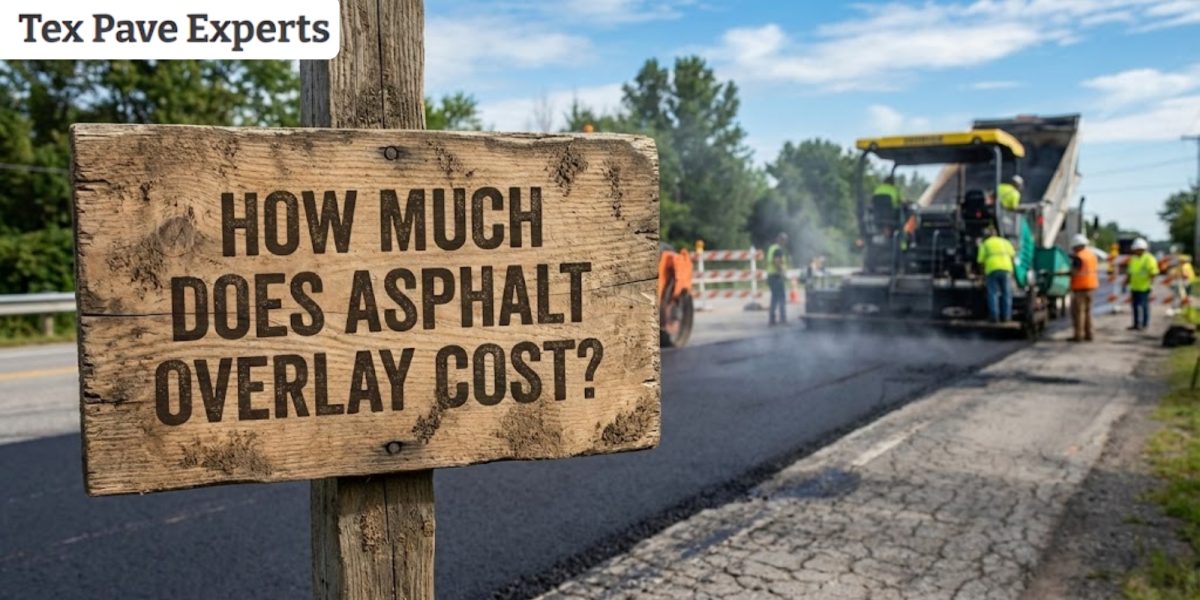
When an asphalt driveway or parking lot starts showing signs of wear but the underlying base is still strong, a fresh overlay may be the most economical rehabilitation option. Rather than excavating the old surface and rebuilding from the sub‑base, contractors simply mill the upper layer and place 1.5-2 inches of new hot‑mix asphalt. This process, also called resurfacing, saves time and materials, extends pavement life, and keeps costs down. Below you’ll find current asphalt overlay cost ranges, key factors that influence pricing, and practical guidance to help decide whether overlaying is right for your pavement.
What Is an Asphalt Overlay?
An asphalt overlay involves applying a new layer of pavement over an existing surface after milling off defects or roughness. According to an Eastern Iowa contractor guide, overlays are ideal when surface damage is minor, the base is sound, and cracks are less than about ¼ inch wide. This thin, fresh layer restores smoothness and appearance without the full expense of replacement. Because the underlying structure remains intact, overlays are usually completed within one or two days and cause minimal disruption to homes or businesses.
Overlay thickness matters. Most overlays range from 1.5-2 inches. This thickness is enough to create a durable surface but thin enough to bond to the existing pavement. However, asphalt overlays cannot correct deep structural problems; if the base has failed or more than about one‑quarter of the surface is damaged, full replacement is a better long‑term investment.
Average Cost of Asphalt Overlay (Per Square Foot)
Industry cost guides estimate that asphalt overlays cost roughly US$2-$7 per square foot, depending on project size and market conditions. A national home‑improvement guide notes that an overlay or “top coat” for an asphalt driveway runs about $3-$7 per square foot, while an Iowa‑based paving company lists $2-$5 per square foot. Residential driveways less than 1,000 sq ft often fall near the upper end of the range, whereas large commercial lots can be closer to $2-$3 per square foot due to economies of scale. For reference, the table below summarizes typical costs and lifespans for overlays versus full replacement:
Option | Cost per sq ft | Typical cost for 1,000 sq ft | Expected lifespan |
Overlay (Resurfacing) | US$2-$7 | US$2 000-$7 000 | 8-15 years |
Full replacement (repaving) | US$5-$12 | US$5 000-$12 000 | 20-30 years |
Costs based on 2025 price guides. Larger projects typically reduce the per‑square‑foot price due to shared mobilization costs.
A small, single‑car driveway (~300 sq ft) might cost around US$900-$2 100, whereas a 1 000‑sq‑ft driveway could range from 3 000-$7 000. Costs increase if milling depth exceeds 2 inches, if the area is irregularly shaped, or if site access is difficult. To compare, building a brand‑new asphalt driveway costs $7-$13 per square foot, underscoring the savings offered by an overlay when the base is still sound.
Factors That Influence Overlay Cost
Size and Layout of the Area
The most obvious driver is square footage; larger jobs spread mobilization and equipment costs over more pavement, lowering the unit price. A 300 sq ft residential driveway may cost closer to $7 per square foot, while a 10,000 sq ft parking lot could drop to around $2-$3 per square foot due to economies of scale. Complex shapes, multiple entrances, or tight access can raise labor time and thus increase the price.
Milling Depth and Surface Preparation
Before adding new asphalt, contractors often mill (grind) away rough or cracked material. Milling is priced separately and depends on depth. A Michigan paving contractor reports that basic milling (1-2 inches) runs $2.50-$5.00 per square yard, medium‑depth milling (2-4 inches) is $5.00-$8.00, and deeper milling can reach $12 per square yard. Projects requiring deeper milling or extensive removal naturally cost more.
Condition of the Existing Pavement
Overlays are only suitable when the pavement’s base is structurally sound. If more than roughly 25% of the surface exhibits deep cracks, potholes, or structural failures, repaving is recommended. Extensive cracking or alligatoring requires milling at least 2 inches and repairing the base before overlaying; otherwise, reflection cracks will appear quickly. Conversely, surfaces with only light cracking and good drainage need less preparation, lowering the price.
Material Type and Thickness
Most overlays use standard hot‑mix asphalt, but specialty mixes (porous asphalt, colored or stamped finishes) cost more. For instance, porous asphalt averages $3-$8 per square foot, and decorative or heated asphalt can reach $10-$25. Adding extra thickness beyond 2 inches increases material and compaction costs but may extend pavement life.
Labor and Local Market Conditions
Labor accounts for roughly half of overlay costs, averaging $5-$7 per square foot for asphalt paving. Rates vary with regional wages and demand. Urban areas or regions with high labor costs will see higher prices. Scheduling during less busy seasons (early spring or late fall) can yield better rates; a Michigan paving guide notes that shoulder‑season projects often secure favorable pricing because contractors seek to fill gaps in their schedules.
Additional Features and Site Considerations
If drainage upgrades, edging, or decorative curbing are required, they add to the total. Driveways needing removal of trees or old concrete surfaces will incur demolition and disposal fees (typically $1-$2 per square foot). Storm‑water improvements or lighting also increase the budget but enhance functionality and curb appeal.
Benefits of an Asphalt Overlay
Overlaying a driveway or parking lot offers several advantages beyond cost savings:
- Lower upfront investment: An overlay costs roughly 30-50% less than full replacement. It uses less material and requires less labor because the existing base remains.
- Faster installation: Resurfacing takes only 1-2 days, meaning minimal disruption to your home or business compared with 3-5 days for a complete rebuild.
- Improved sustainability: Reusing the existing base and recycling milled asphalt reduces landfill waste and conserves aggregates. The asphalt industry recycles more than 94 % of reclaimed material.
- Enhanced curb appeal: A fresh, dark surface improves the look of your property and can increase resale value. Smooth pavements also reduce vehicle wear and offer safer footing for pedestrians.
- Quieter and smoother ride: Overlays provide a uniform surface that minimizes bumps and potholes, improving ride quality and reducing noise.
Limitations of Overlays
Despite the advantages, overlays have inherent limitations that should be considered:
- Shorter lifespan: Even with proper maintenance, overlays generally last 8-15 years versus 20-30 years for a full replacement. They may require another overlay or rebuild sooner.
- Does not fix base problems: If the pavement’s sub‑base is unstable, an overlay will not solve the root issue. Structural failures or deep cracks will reappear through the new layer.
- Height and drainage constraints: Each overlay adds thickness, which can create problems at garage thresholds or catch basins. Local codes sometimes limit the number of overlays to maintain proper drainage.
When to Choose Overlay vs. Replacement
Determining whether to resurface or repave comes down to the condition of the existing pavement and long‑term goals:
- Overlay is appropriate when: Less than about one‑quarter of the pavement needs repairs, cracks are under ¼ inch, drainage is good, and the sub‑base remains solid. In these situations, resurfacing can extend life by 8-15 years at a fraction of the cost.
- Replacement is needed when: Cracks are deeper than ½ inch or widespread, potholes expose the base, the pavement is over 20 years old, or multiple prior overlays exist. Full replacement resolves structural issues and offers a 20-30‑year life.
A professional assessment helps decide the best approach. For a North Texas driveway, local temperature swings and soil conditions also matter. Extreme heat softens asphalt, while occasional freeze–thaw cycles can cause cracks. Seasonal timing is important spring or early fall provides optimal paving temperatures (50-90 °F).
How to Reduce Overlay Costs
- Work with a local contractor. Partnering with a North Texas company reduces transportation and mobilization costs. Local contractors understand regional soil and climate conditions and can tailor the overlay thickness accordingly.
- Schedule during off‑peak seasons. Late spring or early fall are often less busy for paving companies, leading to more competitive pricing. Avoid extreme summer heat, which can soften freshly laid asphalt and complicate compaction.
- Consider recycled asphalt. Using reclaimed asphalt pavement (RAP) can cut material costs by 20–30 %, according to industry reports. RAP is eco‑friendly and suitable for many driveways when properly designed.
- Bundle projects. Combining your driveway overlay with neighboring property owners or scheduling multiple areas at once spreads mobilization costs and may qualify for volume discounts.
Related Resources and Practical Advice
Tex Pave Experts offers in‑depth guides that complement the information above and help you make informed decisions:
- Budgeting for paving: For a detailed breakdown of installation costs, including material types and thickness choices, see our guide on asphalt paving cost per sq ft.
- Comparing materials: Curious whether concrete might be better for your driveway? Our asphalt vs concrete cost comparison weighs upfront and long‑term costs.
- Sustainability matters: Learn why asphalt can be an eco‑friendly choice in our article on asphalt’s environmental impact.
- Material science: Understand the components of asphalt mixes and how they influence durability and cost.
- Timing your project: Not sure when to schedule? Our guide to the best time to repave your driveway explains seasonal temperature windows.
- Addressing cracks: If you’re dealing with fissures, read how to repair or replace cracked driveways for practical advice.
- Overlay vs replacement: For a deeper comparison of resurfacing and repaving, see our resurfacing vs replacement guide.
- Long‑term care: Maintaining your investment is crucial; follow our asphalt driveway maintenance tips to prolong lifespan.
- Material selection: Explore the pros and cons of asphalt vs concrete driveways to choose the right surface for your home.
- Foundation matters: Good pavements start with a strong base. Learn about sub‑base choices in our road‑base essentials guide.
Why Choose Tex Pave Experts?
Tex Pave Experts has more than 35 years of experience paving and resurfacing driveways, parking lots, and roads across North Texas. Our team understands the region’s unique climate and soil conditions, and we use high‑quality materials and modern equipment to deliver durable, attractive pavements. We provide honest assessments. If your pavement is a good candidate for an overlay, we’ll explain how resurfacing can save you money without cutting corners. If full replacement is the better option, we’ll lay out the facts and long‑term benefits.
Contact Tex Pave Experts today to schedule a site evaluation and receive a customized quote. Our knowledgeable team will help you determine the most cost‑effective solution for your driveway or parking lot, ensuring a smooth surface and protecting your investment for years to come.
Ready to extend the life of your pavement? Call us at (972) 569‑7946 or request a quote. We serve Quinlan, the greater DFW Metroplex, and surrounding areas with reliable asphalt paving and resurfacing services.